Discovery that changes the roadmap
Jobs to be Done, opportunity solution trees and a steady rhythm of user interviews, so we build the missing piece instead of the loudest request.
66→87%CSAT liftSenior Product Manager · Oslo, Norway
I turn complex problems into simple products people trust. Discovery-led, data-backed, and technical enough to prototype the first version myself.
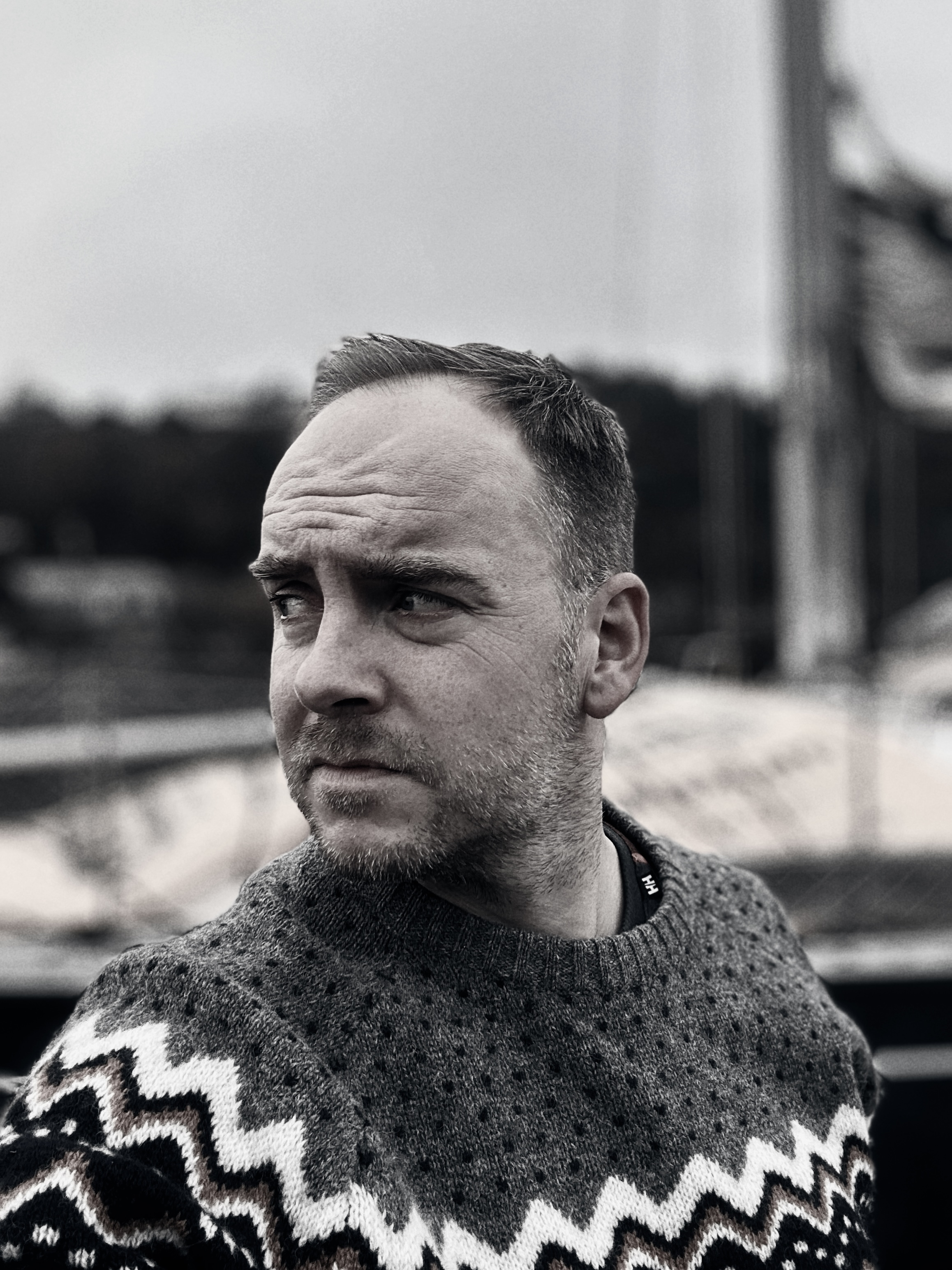
I'm a Senior Product Manager at Arrive (formerly EasyPark Group), where I own parking policies and pricing across Europe, ANZ and the US.
My work sits where complex systems meet real people: operators configuring prices for thousands of zones, where one wrong field means a driver pays when parking should have been free. I like taking that kind of complexity and making it safe, simple and fast.
I lean on continuous discovery, hard data and hands-on prototyping. I'm comfortable in the technical details, whether that's digging into the data, reading an API response or tracing why a price came out wrong. It makes me quicker to work with engineers, not a replacement for them. When it helps a decision, I'll build the first version myself, often with AI, sometimes during the meeting.
Four things I bring to a product team, each backed by a case study below.
Jobs to be Done, opportunity solution trees and a steady rhythm of user interviews, so we build the missing piece instead of the loudest request.
66→87%CSAT liftPricing engines, configuration tools and platform migrations, where mistakes cost real money. I help design guardrails that catch errors without slowing people down, and I'm trained in incident management for when things still go wrong.
−36%misconfigurationsHands-on analysis with data from Snowflake and Mixpanel: sizing opportunities, segmenting users and finding root causes, so priorities rest on evidence rather than opinion.
71%coverage at MVPI understand the systems well enough to investigate problems with engineers and to build working prototypes in hours, so we can test an idea with stakeholders before committing to build it properly.
<1 hridea to validated prototypeThree in depth, three more below. Each one covers the problem, my role, and what changed.
A silent safety net that catches pricing mistakes before drivers ever see them.
| Period | Time | Price / hour |
|---|---|---|
| 1 | 08:00–12:00 | |
| 2 | 12:00–17:00 | |
| 3 | 17:00–20:00 | |
| 4 | 20:00–23:00 |
Errors (1)
Price is far above the median for this tariff.
Period 3 · €250.00 is 91× the median
PRICE_SPIKE_MEDIAN
Tariff configurations are detailed and complex, and small mistakes are easy to miss by eye. The goal was to catch them where they start, before they could ever reach drivers, without slowing operators down.
I led a root-cause analysis across past configuration issues. Most fell into a few predictable patterns:
Together with configuration experts and engineering, I turned those patterns into 33 validation rules and shaped how they show up: checks run on every save and flag issues quietly, without ever blocking the save.
After launch, misconfigurations fell 36% year-on-year. Issues are caught where they start, operators stay in their flow, and acknowledged warnings leave a clear audit trail.
From stakeholder call to validated prototype in under an hour, built live with AI.
| Zone | Date | Window | Price | Result |
|---|
Run the test to see results.
Configuration experts managing parking across major US cities had a scale problem. A single nationwide holiday touches thousands of zones, and one missed configuration means drivers get charged when parking should be free.
Instead of writing a spec, I built a working prototype with AI during the stakeholder call itself. Knowing how pricing is configured and calculated let me shape it around how the experts actually work. We tested it live and adjusted it on the fly until it did what they needed. Engineering then built the production version properly and securely.
Since release there have been zero reported holiday pricing incidents. The tool turned out to be flexible enough that configuration experts now use it for general pricing QA across markets, not just holidays.
Is self-service pricing viable? I answered with data before a line of code was written.
Tier 8 became the MVP scope. Everything after it adds far less.
Half of all operators are simple enough to self-serve today
Operators couldn't update their own prices. Every rate change, however routine, needed a configuration expert. Was a self-service product viable, and what would it have to cover to be useful across the whole operator base?
I pulled tariff data for 5,640+ EU operators from Snowflake and built a 0–25 complexity score across 39 configuration dimensions, splitting operators into four tiers. I checked all 40 tariff fields for whether operators could safely edit them (24 could), then modelled how much of the operator base each feature tier would cover.
The analysis gave the team a data-backed MVP scope with measured coverage at every milestone: 52% of operators viable right away, 71% covered by tier 8. Price changes, the most requested operator action, came out as the clear place to start.
Owning the domain behind 2.8B+ price requests a year, and making it easier to configure correctly.
Pricing across 20+ countries, each with its own regulations, currencies and operator models, runs on one shared engine. Every new market adds edge cases, which makes getting configuration right harder as the platform grows.
I took ownership of the domain and ran structured discovery to learn where operators needed it to work better. I prioritised the edge cases that mattered most to them, dug into root causes together with engineering, and set up regular user interviews to keep improvements grounded in real needs.
Over that period, operator CSAT rose from 66% to 87%. The engine runs live in every active market with 100% uptime over the last 24 months, and engineering time has shifted from maintenance to growth.
A small feature that removed the most repetitive job operators had.
In the time it took to build one configuration from scratch, operators can now create almost four.
Operators often needed configurations very similar to ones they already had, and building each from scratch meant repeating the same manual steps.
I mapped operator workflows with Jobs to be Done and an opportunity solution tree. It showed that copying an existing configuration wasn't a nice extra. It was what operators were actually trying to do, so I prioritised it and worked with engineering to ship it.
With copy in place, configuration time dropped from 105 to 27 seconds, 74% faster. Error rates and support load fell with it, and operators work with more confidence.
Retiring a legacy pricing platform without breaking a single live market.
How delivery played out
Illustrative shape: fixes landed here and there, most new features shipped at the end.
A legacy parking platform was being retired. Before migrating, every configuration model, tariff type and pricing behaviour had to be mapped to the new platform, and every gap closed without disrupting live markets.
I led a systematic gap analysis across the calculation engine, configuration UI, tariff types and operator workflows, and prioritised the 35+ gaps it surfaced. With engineering, we built simulation tools to prove pricing parity between the old and new platforms, created a new tariff type for configurations that weren't supported before, and automated the bulk migration.
All 35+ gaps were closed over 18 months. Pricing parity was confirmed in every migrated market, automated jobs removed manual rework, and the migration finished with zero pricing incidents in production.
Small products where I get to be PM, designer and engineer at once. It keeps my instincts sharp and my prototyping fast.



When I'm not thinking about products, I'm usually outside somewhere. The rest of the time I'm building something small that probably didn't need a computer attached to it.
Fig. 01
Slow enough to think, fast enough to call it training. My better ideas tend to turn up around kilometre five, with nothing to write them down on.
Fig. 02
Hiking anywhere with a summit and a view that makes the climb look like it was a good idea all along. Being outdoors in general, really.
Fig. 03
A Triumph Bonneville: classic lines, a parallel twin, and an owner who spends almost as much time looking at it as riding it.
Fig. 04
Tiny apps, side projects and the odd gadget. I learn best by building things, and every now and then one of them even gets finished.
In short: if it's outdoors or has a power button, I'm probably interested.